| A
novel chemotherapeutic agent for prostatic cancer
Overview
According to the Cancer Research Institute, during their lifetime,
one in six American men will develop prostate cancer, a leading cause
of death among males. A specific sub-type of advanced prostate cancer,
Hormone-Resistant Prostate Cancer (HRPC), is particularly virulent, and
is currently considered incurable.
Scientific
Background
KRX-123 exemplifies the potential of the KinAce™ Drug Discovery Platform.
KRX-123 is a specific kinase inhibitor that targets a member of the Src
kinase family, which is over-expressed in HRPC. Using its proprietary
bioinformatics programs, Keryx researchers have targeted a key regulatory
region in this kinase that is amenable to pharmacological manipulation.
After in vitro screening of multiple candidate inhibitors, KRX-123
emerged as the most active agent. In vivo experiments with KRX-123
were performed using mice with prostate tumor explants. The figure below
shows a typical response to weekly inoculation of DU145 cancer cells in
nude mice (xenograft model) who were then subjected to therapy.
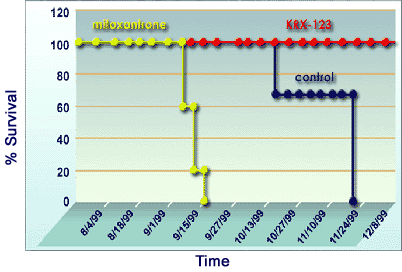
Prostatic
explants treated with either weekly injections of vehicle (control) or
KRX-123 (experimental animals).
In
the study, those mice receiving KRX-123 had survival rates that ranged
between 75% to 100% after four months of treatment. Mice that received
KRX-123 were compared to a control group that received either no treatment
or standard chemotherapy. The entire control group expired.
Market
The success of KRX-123 in preliminary studies is very exciting and signals
an imminent breakthrough for a condition for which no effective therapies
currently exist. The potential market size for KRX-123 for the indication
of HRPC is in excess of $450 million. Keryx plans to proceed with human
clinical trials-Phase I and II-and is in the application process to obtain
permission from the Israel Ministry of Health to begin a Phase I/II clinical
trial in Israel.
|