|
Overview
Keryx has
obtained a license to develop the drug sulodexide (KRX-101) (a heparin type
molecule) to treat diabetic kidney disease (nephropathy) as well as other
conditions. Sulodexide is a drug that has been sold in Europe for many years
by our licensor for the treatment of vascular conditions and it has a well-established
safety profile. Recent phase II level data was presented at a president's
poster session at the annual meetings of the American
Diabetes Association (ADA) in June, 2000.
In June
2000, on the basis of the extensive safety and impressive efficacy data, we
filed an application with the Food and Drug Administration (FDA) to begin
advanced stage clinical trials of KRX-101 for the treatment of diabetic nephropathy.
Market
According to the ADA, there are an
estimated 10.3 million diagnosed diabetics in the United States and approximately
1-2 million individuals have nephropathy. Accordingly, we believe that the
potential annual market available for KRX-101 for the treatment of diabetic
nephropathy is in excess of $800 million.
Scientific
Background
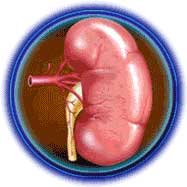
Diabetes often damages the intricate system of delicate capillary filtering
loops (glomeruli) within the kidney. As these loops lose their structural
integrity, their ability to selectively filter the blood's contents diminishes,
and protein (chiefly albumin) is lost into the urine. The presence of protein
in the urine (proteinuria) causes further damage to other vital kidney structures
resulting in a vicious cycle of inflammation and scarring. The end result
is renal failure, necessitating dialysis or transplant.
Previous
clinical trials suggest that KRX-101 protects vital kidney structures by repairing
and maintaining glomerular membranes, thus decreasing proteinuria and its
resultant inflammation and scarring. These effects may help delay the onset
of renal failure thus improving the life of diabetic patients.
|